
Reverse Withdrawal at Online Casinos: Why Casinos Let You Cancel Payouts and Why You Shouldn’t

- A Reverse Withdrawal Is a Cancel Button for Your Cashout
- Two Sides of the “Cancel” Button
- The Real Price of Changing Your Mind
- How the UK, Ontario and Offshore Regulators Handle Reversals
- Ways to Protect Yourself From Your Own Second Thoughts
- How to Spot a Long Pending Window Before You Play
- What the Cashiers and Terms We Reviewed Show
- Casinos Without the Pending Trap
- FAQ
That little “Cancel” button next to your pending payout looks like a favour, but it works for the casino far more than for you. A reverse withdrawal casino feature lets you pull a cashout back into your balance before it’s paid, and some of that returned money goes straight back into play. Below, we explain how the button works, why casinos keep it, what changing your mind really costs, and how to stay out of the trap.
A Reverse Withdrawal Is a Cancel Button for Your Cashout
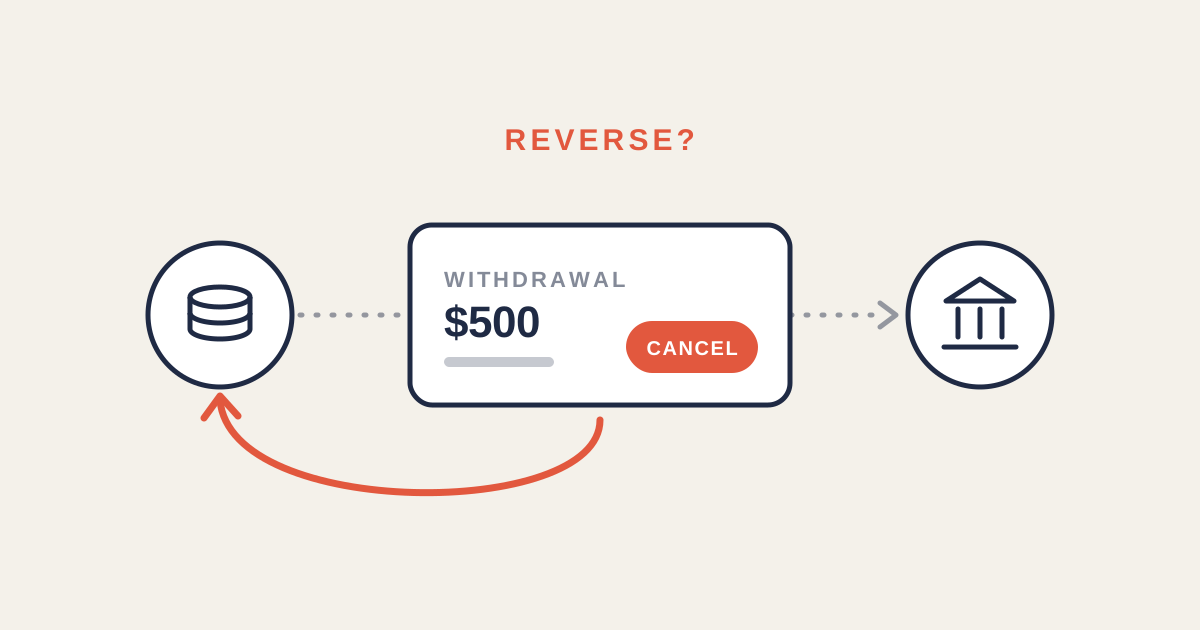
People who ask what a reverse withdrawal is get a short answer. It’s the option to cancel a payout request as long as it still shows as pending, so the money goes back to your playable balance instead of to your bank, card, or wallet.
You usually find it in the cashier, in the list of your withdrawals, as a “Cancel” or “Reverse” link beside the request. The same idea sits behind a search for how to cancel casino withdrawal requests, and the answer is almost always that button, as long as the window is still open.
That window is the casino withdrawal pending period, and it varies a lot. Some sites approve payouts in minutes and never show a button at all. Others hold every request for a day or two before staff looks at it, and the “Cancel” link stays on screen the whole time. Once the status moves from pending to processing, the button disappears, and the money is on its way.
Two Sides of the “Cancel” Button
The honest picture has two sides. On the friendly side, a pending window gives the casino time to run fraud checks, confirm your identity, and catch mistakes, and a cancel option lets you fix a wrong amount or a wrong payment method without calling support. Our guide on why a casino withdrawal stays pending covers those checks in detail.
On the other side sits the business logic. A cancelled payout lands back in your balance, and a balance can be played again. Every spin has a built-in house edge, so money that goes back into the game loses value on average, and the casino is the one that gains from it.
Regulators have looked hard at this feature for that reason, and we get to them below. The point is the design, and the design leans toward keeping your money on the site.
The Real Price of Changing Your Mind
Changing your mind feels free, but it comes with a price tag. Say you win and request a payout of $500, then cancel it since you feel lucky. Suppose you play a slot with a 96% return to player.
On average, each full pass of your balance through the game returns $480 and keeps $20. Play the balance through ten times, and you can expect about $332 left. Play it through fifty times and about $65 is left. Real results swing up and down, and some sessions end ahead, but the average always points the same way.
The numbers matter less than the pattern. The reason for cancelling is almost always to keep playing, and the original win was a result you had already locked in. A pending withdrawal is a decision you made with a clear head, and a reversal hands that decision to the version of you who is excited and mid-session.
How the UK, Ontario and Offshore Regulators Handle Reversals
Whether you can cancel a withdrawal depends a lot on where the casino is licensed. Here’s how the three main setups compare.
The UK has banned it outright
If you play at a UK-licensed site, you won’t see a reverse withdrawal casino option at all. The UK Gambling Commission stopped all remote operators from offering it, and its rule is simple: players must not be given the chance to cancel a withdrawal request.
The ban took effect on 31 October 2021. It followed interim guidance in spring 2020 that had already asked operators to drop the feature. The regulator based the decision on research, its own casework and feedback from people with lived experience of gambling harm, and it sees reversing withdrawals as a long-known warning sign. If you’d like the full story, read the UKGC’s decision on reverse withdrawals.
Ontario leaves it to the operator
In the sections we read, we found no ban on a casino reverse withdrawal option, and no rule that requires one either. So the cashier of your licensed site is where you’ll find out. What the standards do require is deposit and loss limits, which we cover in the next section.
Offshore sites follow their own licence
Some regulators expect quick, hassle-free payouts, and others don’t mention the topic at all. That’s why the licence in the site’s footer tells you more than any promise on the homepage.
Ways to Protect Yourself From Your Own Second Thoughts
You don’t need willpower here, only a few settings and habits that decide out of the heat of the moment.
Start by asking support to lock your pending payouts. Searches for “lock withdrawal casino” and “flush withdrawal casino” point to the same request, which is to remove the cancel option or push pending payouts through straight away. Different sites use different names, so describe what you want in plain words and ask for a written confirmation. Not every casino offers it, but many agree when asked.
Next, set limits. Deposit and loss limits cap what you can put in and lose over a day, a week, or a month, and Ontario’s standards require licensed operators to offer them. Loosening or removing a limit has to wait through a cooling-off period of at least 24 hours, which gives you time to think. If you want a longer break, self-exclusion is the strongest tool, and our guide to how self-exclusion works walks through the steps.
How to Spot a Long Pending Window Before You Play
You can find out how long a casino holds withdrawals before you deposit a cent. These three checks take only a few minutes:
 Read the withdrawal terms
Open the withdrawal section and look for words such as “pending”, “review period”, “processing time”, or “reversal”. A clear statement like “withdrawals are approved within 24 hours” tells you exactly how long the window is. Silence is a hint too, since a site that doesn’t state its timing leaves you guessing.
 Look at the cashier
If you see a “Cancel” or “Reverse” link next to a withdrawal, the site runs a pending window with a reversal option.
 Ask live chat
Ask how long the pending stage lasts and whether the cancel button can be disabled for your account. Save the answer.
Our list of fast payout casinos includes a “Red Flags” block that shows which wording signals a long hold.
What the Cashiers and Terms We Reviewed Show
The pattern is easy to describe. Some sites show a “Cancel” button during a pending stage that commonly lasts from several hours to a day or two. Others approve most requests automatically, so there’s no window to cancel in the first place.
Automation tends to go hand in hand with crypto payouts. Our list of crypto casinos with automated payouts shows how the pending stage shrinks when software handles the approval. Even there, a first payout or a large one can trigger a manual review, so the wait isn’t always zero.
Casinos Without the Pending Trap
If you’d rather not face the button at all, pick a casino that doesn’t leave you hanging. Our list of casinos with no pending period gathers sites that release payouts without a holding stage, and the casinos that pay out the same day are a good second stop. Fewer hours in the queue means fewer chances to change your mind, and a site without a reverse withdrawal casino button removes the temptation altogether.