
Can a No Verification Casino Still Ask for ID? 7 Triggers That Turn On KYC

A no KYC casino skips the paperwork when you sign up, which is exactly what the label promises. It describes how you get in, though, not every withdrawal that follows. We looked at what sets off a surprise ID check, how it affects your payout, and what you can do to keep these requests rare.
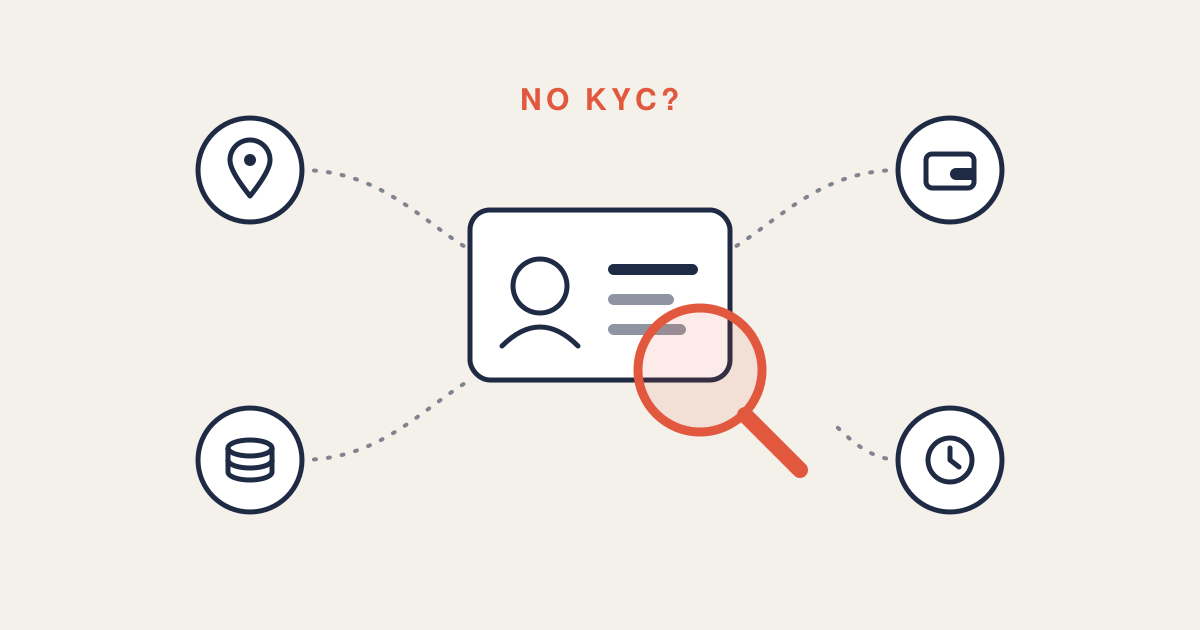
Three Models Hide Behind the Label No KYC
Not every site that says no KYC works the same way, so it helps to know the three models. Some sites truly ask for nothing until something unusual happens. Others run a soft KYC casino setup, which means they quietly watch your payment details and your location and ask for papers only when something looks off. The third group asks for ID before your first withdrawal, even though sign-up and play are open to everyone.
Players who type “can a no KYC casino ask for ID” usually want to know which of these models they signed up for, and the honest answer is that it depends on the rules of the site. The rules sit in the terms and in the AML or KYC policy, so a few minutes of reading before you deposit tells you which model you are dealing with.
For sites at the light end of the scale, see our list of no verification casinos.
Seven Situations That Switch On an ID Check
Each trigger below gets the same three-step treatment, starting with the situation and followed by the casino’s reasoning and then the effect on your payout. Searches such as “why is the casino asking for verification” almost always lead back to one of these seven.
A Big Win or a Crossed Threshold
The most common trigger is simply the total amount of money moving through your account. Casinos set a line, either as one large payout or as a running total, and an account that crosses it gets asked for documents. Many sites place that line near a couple of thousand euros or dollars, though the figure differs from site to site and some never publish it.
The casino reacts to this since larger sums carry more money laundering risk, and regulators expect a closer look as amounts grow. Your payout pauses until you verify, which is why a search like “casino asking for ID after win” is so common. We cover the exact numbers in our guide to no KYC withdrawal limits.
Cashing Out Before You Have Played Your Deposit
Depositing and withdrawing with little or no play in between looks like using the casino as a bank. Most terms ask you to wager a deposit at least once before it becomes withdrawable, and some ask for it several times over.
When a deposit sits untouched, the casino can add an enhanced review at the withdrawal stage. In that case, the withdrawal waits as long as the casino looks at the account.
A Payout Route That Doesn’t Match the Deposit
Money is supposed to leave the way it came in. Most casinos send withdrawals back to the method you deposited with, and crypto sites usually pay out only in the coin you sent. Asking for a different method, or swapping coins along the way, breaks that pattern.
The casino reacts by asking who owns the new account or wallet, and it can require proof that the payment method is held in your own name. Your payout then waits until support confirms the route, or until you go back to the original one.
Sudden Jumps in Location or Network
Casinos watch where you log in from, and many use device checks, geolocation, and detection of masked IP addresses. Nearly all of them treat a VPN or proxy as a breach of the rules. The reason is licensing, since a casino can only serve players in places where it’s allowed to operate.
Funds Linked to Flagged Wallets
Many casinos screen crypto deposits against blockchain analytics. A casino can refuse withdrawals to high-risk addresses, and it can add due diligence and a higher wagering requirement when it suspects that coins passed through a mixer.
The casino reacts to this since regulators hold it responsible for where its funds come from. A flagged deposit usually means the account is suspended or the payout is declined until the casino reviews the source of funds, and players search for “source of funds casino” rules after such a freeze.
The only safe path is to deposit from wallets and accounts you own and can document, and to answer the review honestly. Hiding where funds came from breaks the terms and the law.
Patterns That Look Like Bonus Abuse
Casinos link accounts by device, IP address, household, and payment method. Most allow one account per household and treat a shared IP or device as a duplicate account. Other warning signs include maximum bets during wagering and depositing only to claim a bonus.
Each pattern costs the casino money, so it can freeze funds, void bonuses and winnings, or close the accounts. Your payout stays on hold during the review, and in some cases it’s cancelled. One account on one device, played honestly, avoids all of it.
Routine Reviews and Regulator Audits
Sometimes nothing about you is unusual, and the request still arrives. Many casinos run periodic random checks, and their terms let them request ID at any time and for any reason.
The thing is that casinos have to show regulators that their checks work, so a routine review can reach any account. Your payout waits only as long as the document review takes, which is the same few days as any other check.
Steps to Take When the Request Arrives
A document request is easier to handle than it looks if you know what to prepare and how the review works. Follow these steps to get through it without delays.
 Prepare your documents
Expect a government photo ID and proof of address no older than three months. Some casinos add copies of your deposit card, and some ask for a photo of you holding your ID next to a paper with a random number written on it. Keep a scan of your ID and a recent bill ready so the upload takes minutes.
 Check that your details match
Make sure the name and address on every document match what you typed into your profile, since a small mismatch is the most common reason a clean file gets sent back. Photos should show all four corners of the document in good light, with no glare over the text. Our Casino KYC Guide shows how to photograph and format each document.
 Upload through your account only
Use the verification page inside your account, never email or a message from someone who contacted you first, since scammers copy support teams.
 Wait for the review
Review times differ from site to site. An automated check can finish within minutes or up to an hour, whereas a manual review usually takes three to seven days. A casino KYC after withdrawal request normally ends within those windows, so a quiet inbox for a day or two is no reason to worry.
 Respond on time and escalate if needed
Most terms give you somewhere between two weeks and a month to respond, and after that the casino can lock the account and keep the balance. If a casino stalls or rejects valid documents, contact support first and keep a copy of every message. If that doesn’t help, you can complain to the regulator named in the casino’s footer.
So, if a casino stalls or rejects valid documents, contact support first and keep a copy of every message. After that, you can complain to the regulator named in the casino’s footer.
Habits That Keep Extra Checks Rare
You can’t switch off random reviews, but you can avoid most of the triggers behind them. Each of these habits takes one possible red flag off your account:
- Stick to one account on one device. Casinos link accounts by device, IP address and household, so a second profile looks like bonus abuse.
- Withdraw the way you deposited. Using the same method in both directions keeps the payout route clean and spares you an ownership check.
- Play each deposit through before you cash out. An untouched deposit followed by a withdrawal is one of the quickest ways to trigger an enhanced review.
- Read the bonus terms. Many of the abuse rules sit there, including limits on bet size during wagering.
- Skip VPNs entirely. A masked location breaks the terms at almost every casino and can put your winnings at risk.
- Finish verification early. A verified account clears payouts faster, and casinos that pay out within hours once you’re verified show how quick things get afterwards.
None of these habits needs extra effort. They simply keep your account looking like what it is, an ordinary player’s account.
Two Everyday Scenarios That End in a Document Request
The triggers are easier to understand when you see them play out. That’s why we put together two common situations, each ending with the casino asking for documents.
In the first, a player joins a site that asks for ID at registration before any crypto play, so the wall appears before the first bet. Every later withdrawal then needs an identity check as well, and two weeks of silence locks the account.
In the second, a player deposits, withdraws without wagering, and then wins enough to pass the threshold that the site publishes. The untouched deposit starts an enhanced review, and the larger total brings a standard ID request on top of it.
Both scenarios show that the ID request is written into the terms from day one. For more sites in the same spirit, see our no KYC casinos we’ve reviewed.
Where Checks Come Latest
Some casinos delay documents longer than others, and the delay shows in the terms through a published threshold, no sign-up checks, and a clear payout route. Our list of casinos with minimal ID checks ranks sites by how late they ask, so it’s the place to start. Even there, the answer to “can a no KYC casino ask for ID” stays yes, so plan for the request.